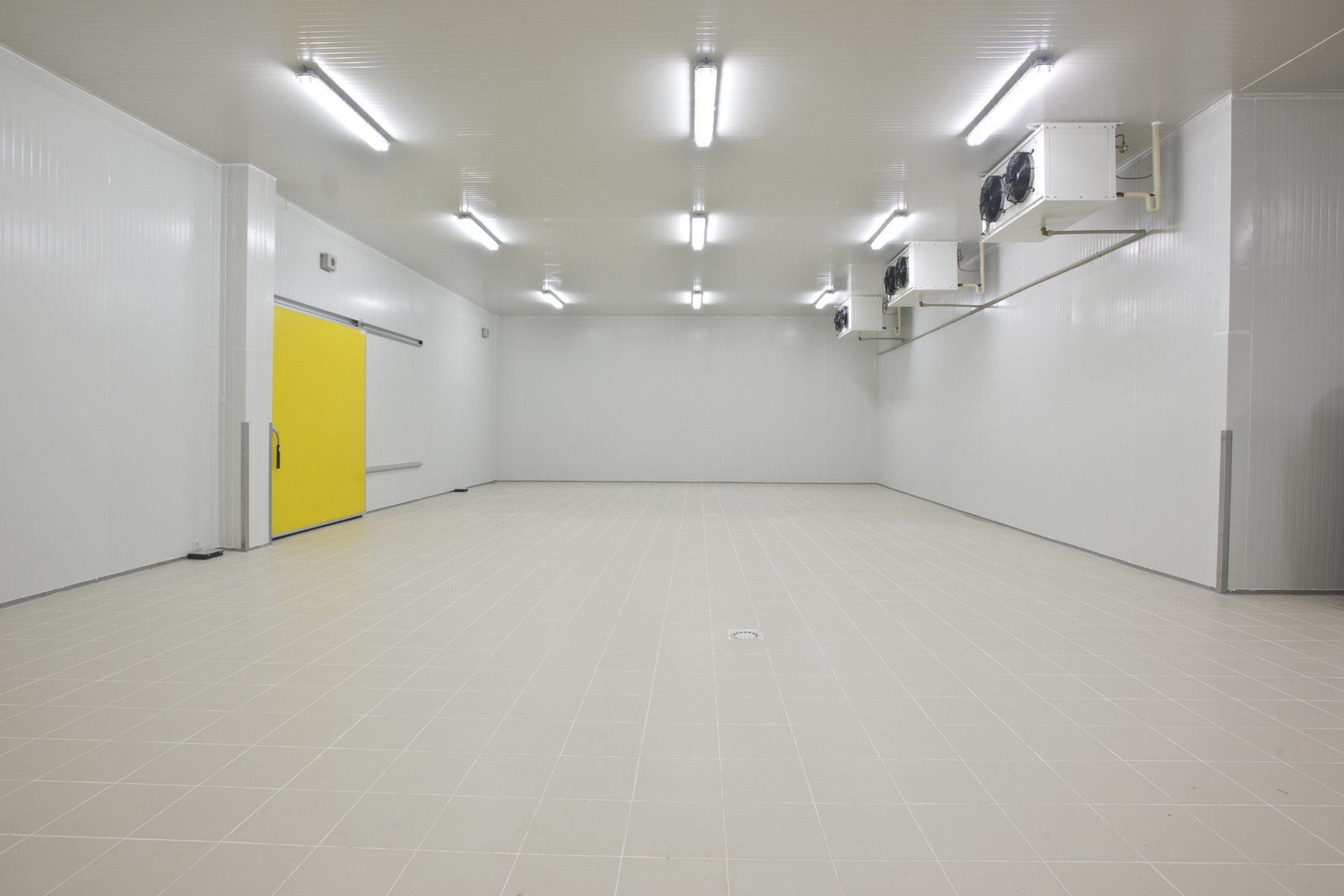
Blast chilling or blast freezing
A blast chiller brings cooked or fresh product down to chilled temperature fast. A blast freezer takes it through freezing to a frozen core, ready for storage. Both are pull-down rooms rather than storage rooms: the plant is sized for the heat coming out of the product, which is usually far larger than anything a storage room has to handle.
What decides the size
- The weight of each batch, and how many batches a day
- The temperature product goes in at, and the core temperature it has to reach
- The time allowed, set by your food safety plan or your customer’s specification
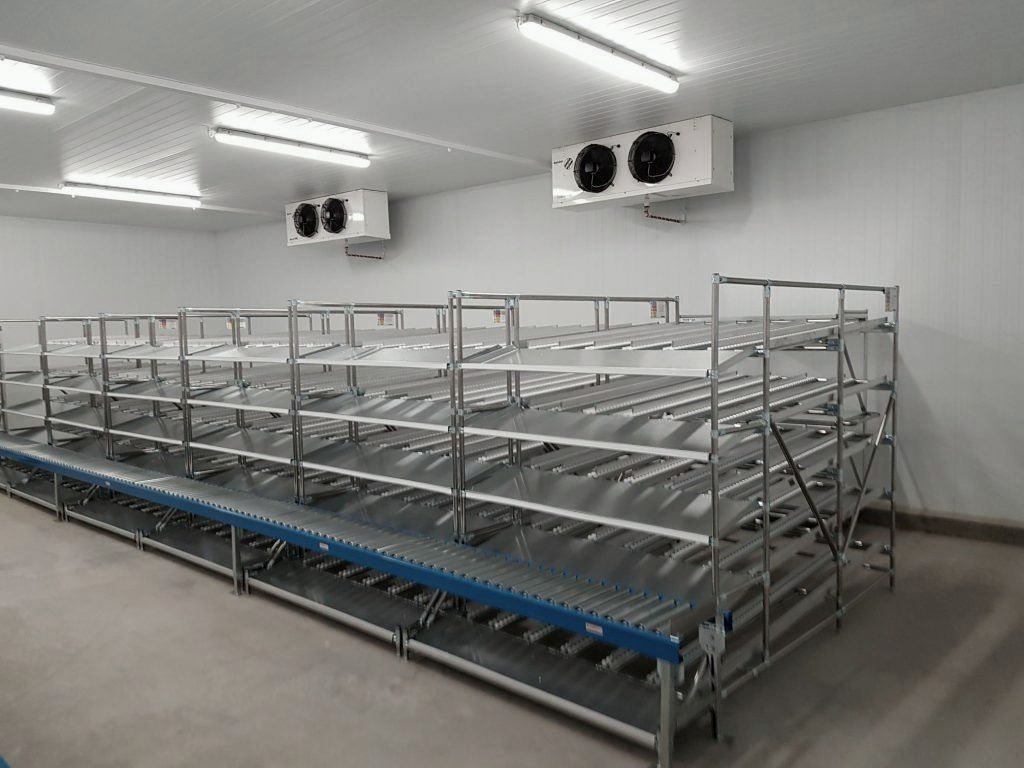
- Packaging, and how product is loaded: trolleys, racks or pallets
- Airflow across and through the load
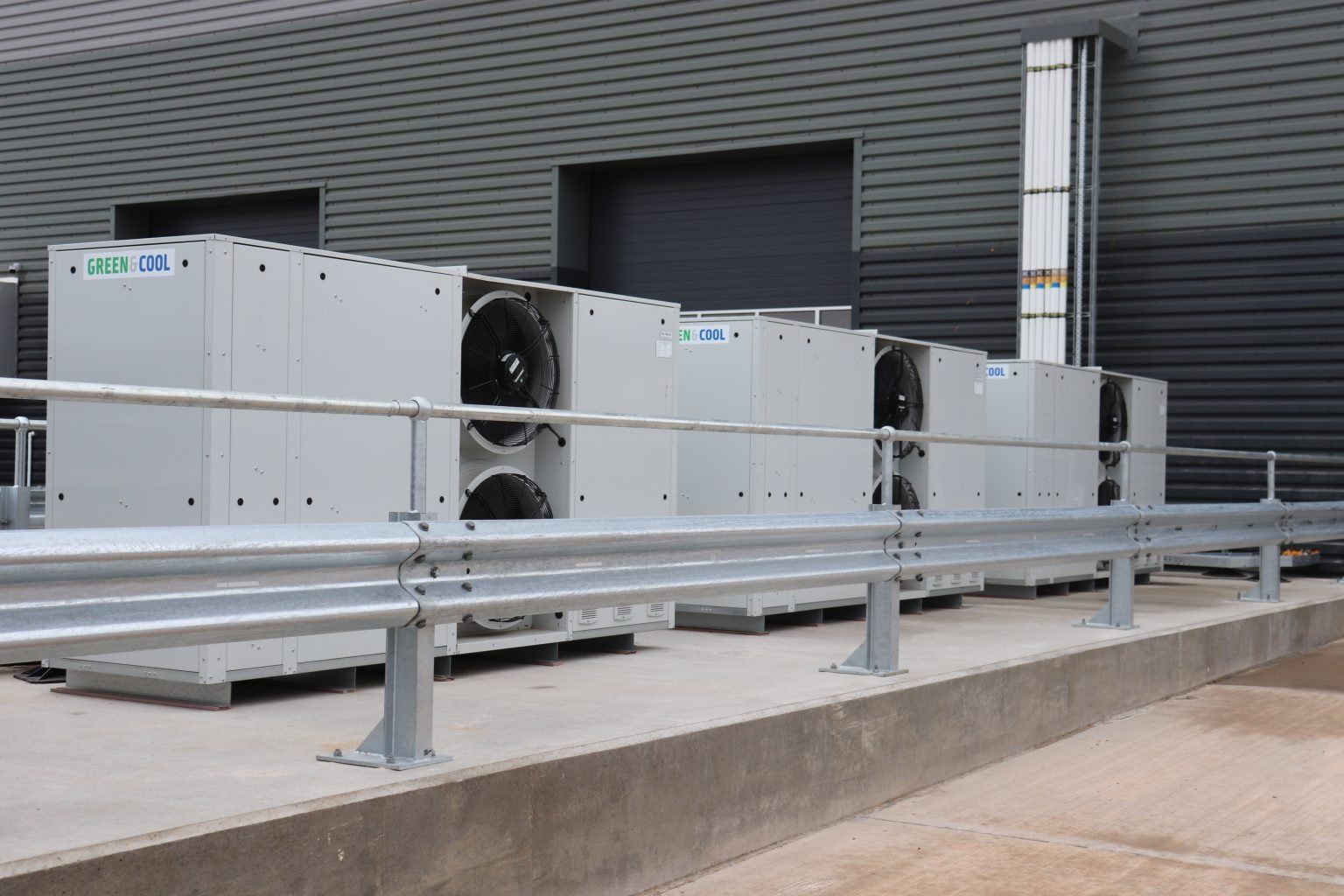
- Conditions at the condenser, which in the Gulf means designing for +50 °C
Get any of these wrong and the room will reach temperature on a test with half a load and fail on a full one. We ask for the numbers at the survey and size the plant for the worst day, not the average one.
How we build them
- An insulated envelope thicker than a storage room’s, sealed on the warm side
- An insulated, heated floor on every blast freezer
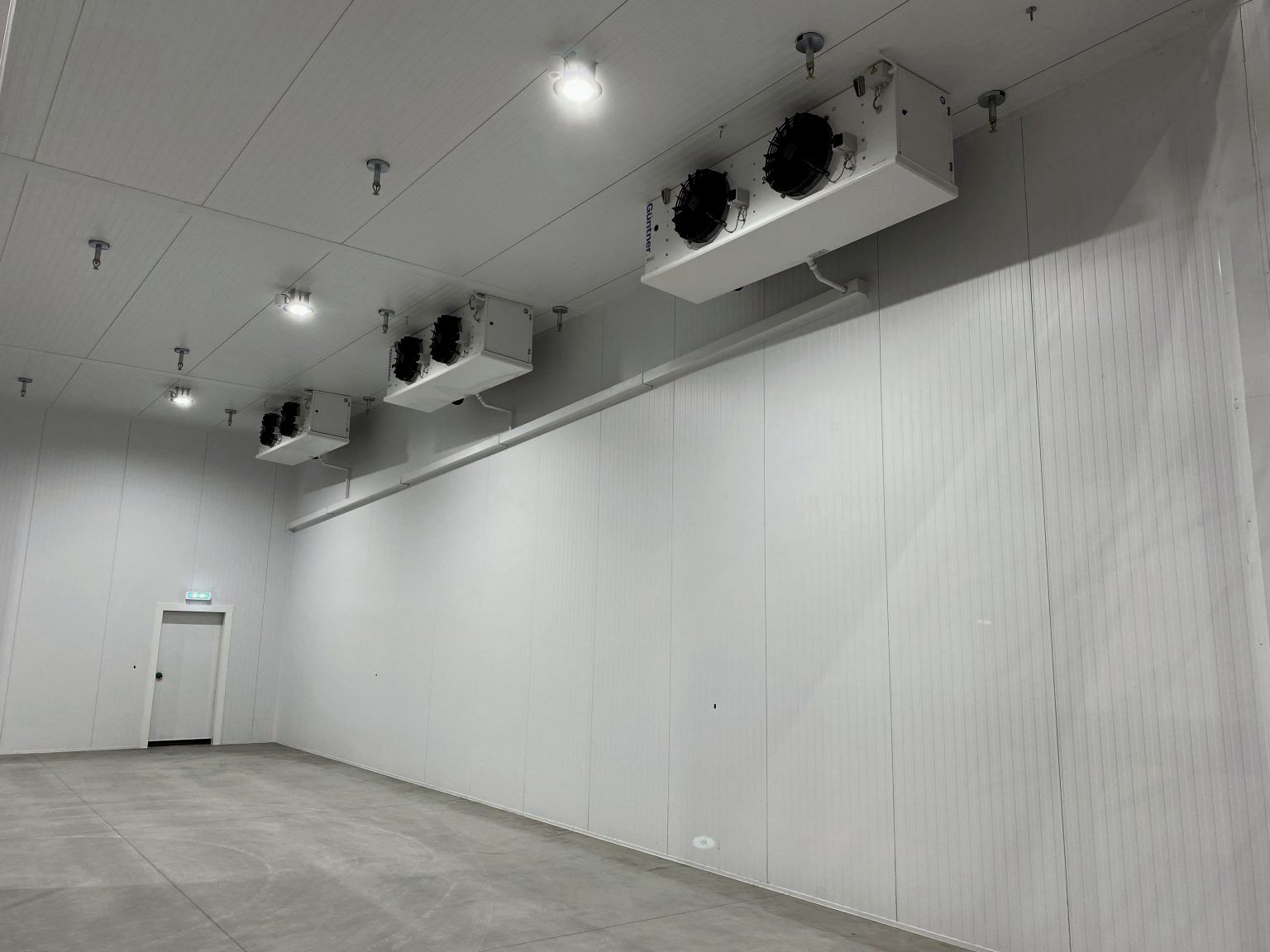
- High-airflow evaporators arranged for even air across the load
- Heated door frames and heated pressure relief
- Defrost designed for heavy, repeated frosting
- Controls with product core probes, and a record of each pull-down
Questions we are often asked
Can a blast freezer be used for storage?
It can hold product, but it is an expensive way to store it, and loading warm product next to stored product puts that stock at risk. Most operations blast freeze, then move product to a separate frozen store.
Can you convert an existing freezer room into a blast freezer?
Sometimes. It usually needs new refrigeration and evaporators, and often a thicker envelope and a heated floor if the room was not built for it. We survey the room and tell you whether conversion makes sense.
What information do you need for a quote?
Product type, batch weight, batches per day, entry temperature, target core temperature and the time allowed. If you do not have all of it, we work it out with you at the survey.